This audits disclosure only—not clinical efficacy, safety, or whether a product is right for you.
01 / THE ACTUAL INGREDIENT
Does it name the marine extract amount per serving?
Look for a specific milligram amount attached to a named seaweed or marine extract—not just a “fucoidan complex” headline.
NYUM EXAMPLE300 mg of named Super-U-100® marine extract per capsule.
02 / THE SPECIFICATION
Does it disclose a fucoidan standardization?
A percentage is only useful when the label clearly identifies what it applies to.
NYUM EXAMPLEStandardized to 75%—the percentage is tied to the named extract.
03 / THE METHOD
Does it say how that specification is verified?
Look for a disclosed analytical method, such as HPLC, rather than an unsupported percentage alone.
NYUM EXAMPLEHPLC is named on the ingredient line—not implied somewhere else.
04 / THE SOURCE
Does it name the seaweed species or source region?
“Marine” and “ocean-derived” are broad. A transparent label gives you something more concrete to identify.
NYUM EXAMPLETwo named sources: Atlantic Mekabu + Sea Kelp.
05 / THE EXTRACTION
Does it disclose the extraction approach?
The label should make it clear whether there is a named extract or simply a raw seaweed powder.
NYUM EXAMPLE“Algae extract” is printed directly on the Supplement Facts panel.
06 / THE FULL FORMULA
Are companion actives and their amounts clearly listed?
When a formula includes other ingredients, they should be easy to see—not hidden behind a proprietary blend.
NYUM EXAMPLE250 mg Organic Reishi is separately disclosed—not hidden in a blend.
07 / THE COMPLETE PANEL
Can you find the full Supplement Facts and other ingredients?
The final check: a shopper should be able to read the whole product panel before they buy.
NYUM EXAMPLEFull panel, front to back. You should be able to read it before you buy.
YOUR LABEL DISCLOSURE REPORT
0/ 7 visible proof points
STILL UNKNOWN FROM THIS LABEL
NOW FIND YOUR NYUM MATCH
What do you want from your fucoidan routine?
YOUR MATCH · ESSENTIAL
Organic Fucoidan™
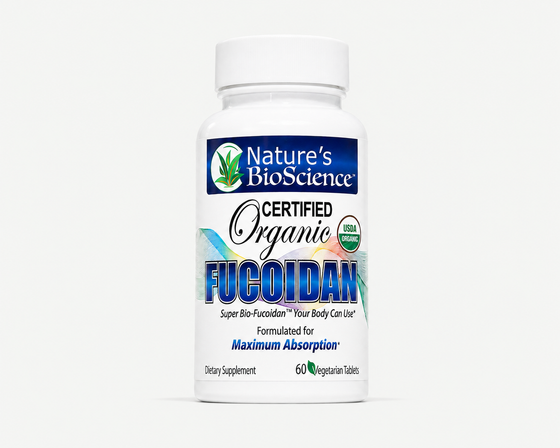
Start with Nyum’s accessible daily formula: a 245 mg Atlantic wakame blend standardized to 45% fucoidan, with ginger, saffron, black pepper, and vitamin E.
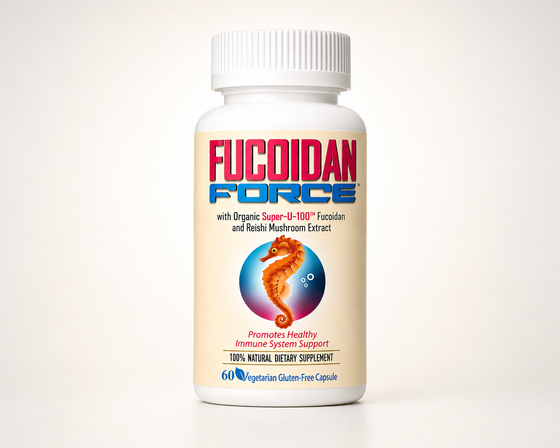
Choose the concentrated flagship: 300 mg Super-U-100® North Atlantic marine extract standardized to 75% fucoidan by HPLC, plus 250 mg organic Reishi per capsule.
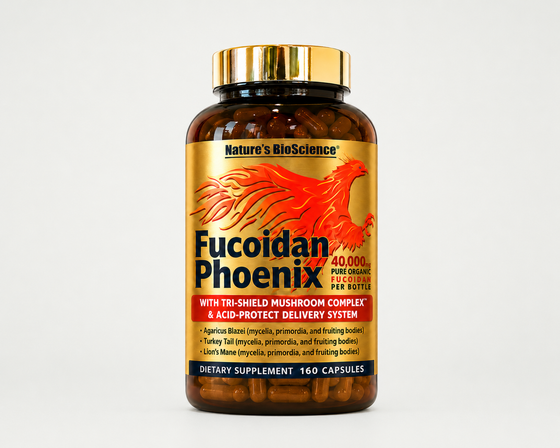
Go broader with a 333.5 mg dual-source seaweed-extract blend standardized to 75% fucoidan by HPLC plus 400 mg of Tri-Shield™ mushrooms in every acid-resistant capsule.
Fucoidan products are not interchangeable from a label alone. The amount, the material it refers to, the specification method, source details, and the full formula all change what you can actually evaluate. This guide helps you spot what is shown—and what is missing.
THE CHECKLIST
What a readable fucoidan label should show.
01
Named extract
A specific marine ingredient and amount per serving.
02
Clear specification
What the disclosed fucoidan percentage actually applies to.
03
Visible method
The analytical method used to support the specification.
04
Source context
Species, source region, and extraction information when available.
Is a higher fucoidan percentage automatically better?
Not by itself. A percentage is only one label detail. You still need to know the exact material, amount per serving, what the percentage refers to, and how the specification is described.
What does HPLC mean on a supplement label?
HPLC is a laboratory analytical method that may be used to identify or quantify components. It is useful label context when it is paired with a clearly named material and disclosed specification.
Why should a fucoidan label name its source?
Seaweeds vary by species and origin. Naming the source gives a shopper more information to identify the ingredient being discussed.
Does this auditor tell me whether a supplement will work for me?
No. It only checks visible label disclosure. It is not medical advice and it does not evaluate clinical outcomes, safety, or individual suitability.